Scissor Jacks vs Stabilizer Jacks: Which Does Your Trailer Need?
Scissor jacks and king pin stabilizer jacks both stop your trailer from rocking once you're parked, but they're not interchangeable, and which one you need comes down to what you're towing. A bumper-pull travel trailer and a 5th wheel stabilize differently, and using the wrong jack in the wrong spot won't give you the solid setup you're after.
Here's how the two compare and how to know which your rig actually calls for.
What Scissor Jacks Do
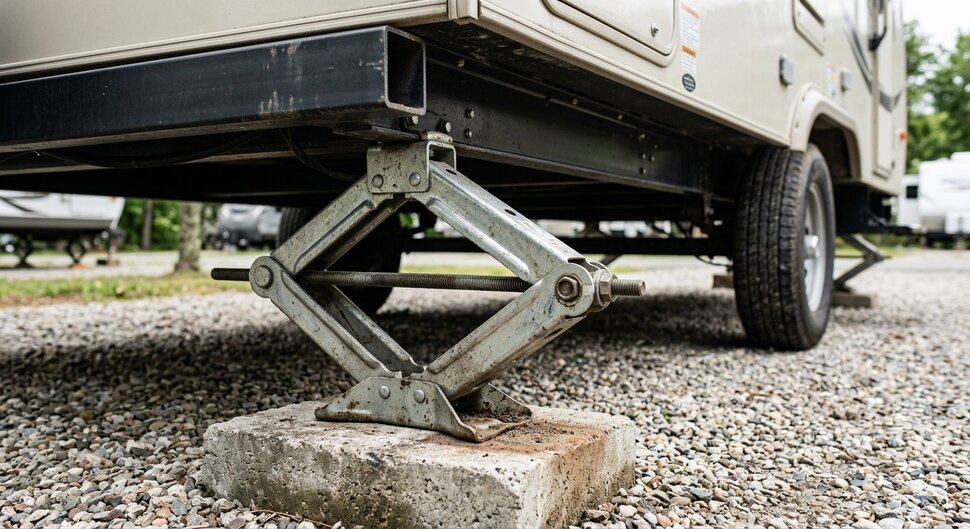
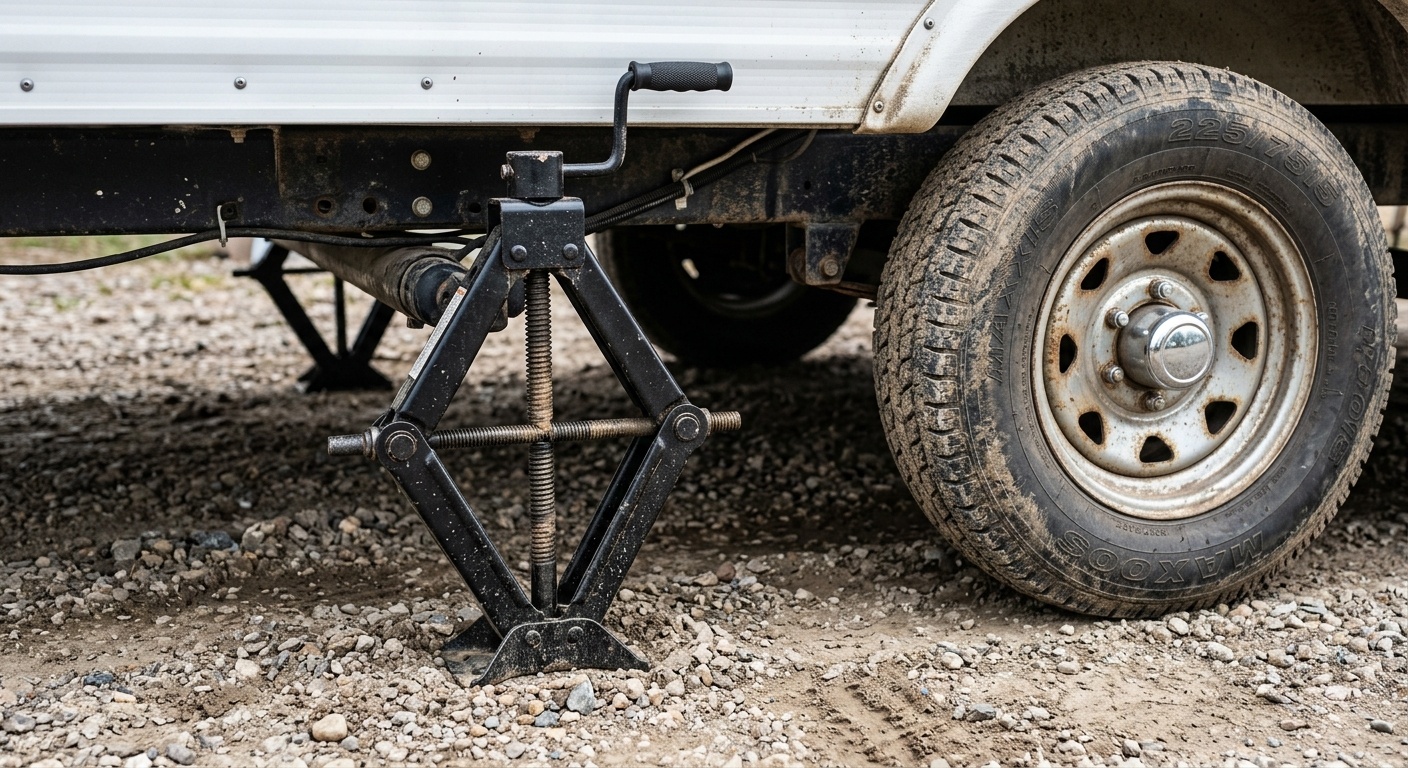
A scissor jack uses a diamond-shaped, X-frame mechanism that extends and retracts as you turn a crank handle. They mount at the frame, usually at the rear corners of a travel trailer, and drop down to contact the ground once you've leveled with blocks or a tongue jack. The scissor action gives good mechanical advantage, so even a jack rated for several thousand pounds is manageable to crank by hand, and a lot of owners speed things up further with a drill and socket adapter.
Scissor jacks work on most bumper-pull travel trailers and smaller RVs, mounted wherever the frame needs extra ground contact. They're mechanically simple, which means fewer parts to fail and an easy fix when something does go wrong.
What King Pin Stabilizer Jacks Do
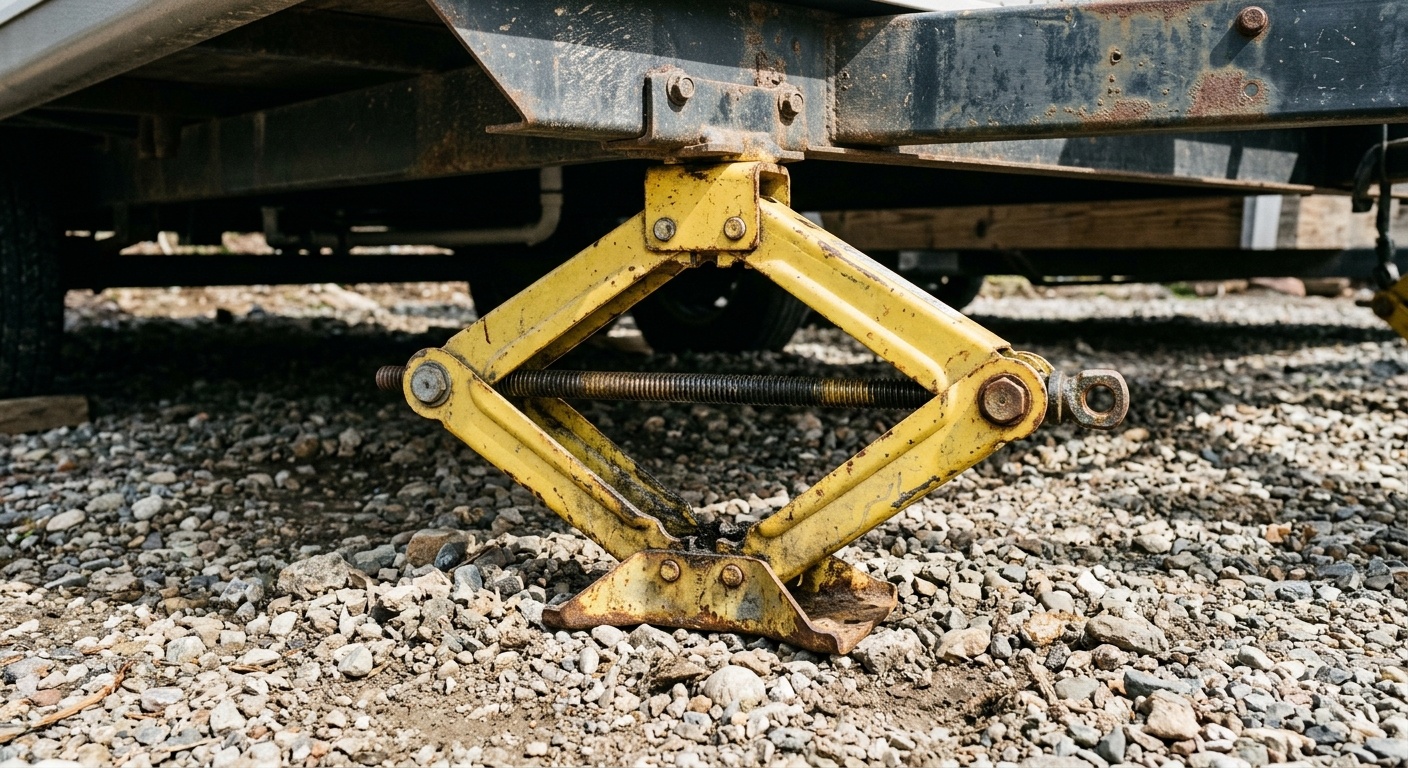
A king pin stabilizer jack solves a different problem specific to 5th wheels. The king pin, the pivot point that connects your trailer to the hitch in your truck bed, is a natural stress point once you've unhitched and the trailer's front end is unsupported by the tow vehicle. A king pin stabilizer jack mounts near that pivot point and adds a dedicated support leg, cutting down on the front-end bounce that shows up when someone walks near the front of a parked 5th wheel.
If you're towing a bumper-pull trailer, you won't need one of these, since there's no king pin to support. If you're running a 5th wheel, it's a purpose-built fix that scissor jacks mounted elsewhere on the frame can't fully replace.
Scissor Jacks vs King Pin Stabilizer Jacks: Side by Side
|
Scissor Jacks |
King Pin Stabilizer Jacks |
|
|---|---|---|
|
Trailer type |
Travel trailers, most bumper-pull RVs |
5th wheels specifically |
|
Mounting location |
Frame, typically rear corners |
Near the king pin, front of the trailer |
|
What it stabilizes |
General side-to-side and corner movement |
Front-end bounce at the pivot point |
|
Operation |
Manual crank, drill-assisted optional |
Manual crank |
|
Mechanical complexity |
Simple, few moving parts |
Simple, few moving parts |
Which One Does Your Trailer Actually Need?
If you're towing a bumper-pull travel trailer, scissor jacks at the frame corners are your standard setup, and that's likely all you need for solid stabilization. 5th wheel owners have a different problem to solve: the kingpin area needs its own support, since it's a separate stress point from the rest of the frame. Many 5th wheel owners run scissor jacks along the frame in addition to a king pin stabilizer jack up front, covering both the general frame and the pivot point specifically.
The short version: match the jack to the stress point. General frame movement calls for scissor jacks. The king pin's specific bounce calls for a king pin stabilizer.
Installing and Using Either Type
Both mount to the trailer frame with brackets and bolt-on hardware, and most owners with basic mechanical skills can handle the install in an afternoon. Once mounted, the process at the campsite is the same either way: level the trailer first with blocks or a leveling jack, then drop your scissor jacks or king pin stabilizer until they contact the ground firmly.
Neither type is meant to lift the trailer or carry its full weight. If a wheel comes off the ground while you're extending a stabilizer, you've gone too far. Back it off until the tire is solidly on the ground again.
Frequently Asked Questions
Can you lift an RV with stabilizer jacks?
No. Stabilizers and scissor jacks are built to support, not to bear the full weight of the trailer. Lifting a wheel clear of the ground puts far more stress on the jack than it's designed to handle.
How much weight can a scissor jack support?
It depends on the model, but most trailer-rated scissor jacks handle several thousand pounds of stabilizing load each. That's still well under what's needed to actually lift a loaded trailer, which is why leveling and stabilizing stay separate jobs.
Should you put blocks under stabilizer jacks?
Yes, particularly on soft or uneven ground. A block or footpad under either type keeps the jack from sinking in over a multi-day stay.
Do I need both scissor jacks and a king pin stabilizer?
If you're running a 5th wheel, many owners use both scissor jacks along the frame for general stability and a king pin stabilizer for the front pivot point specifically. Bumper-pull trailer owners typically only need scissor jacks.
Whichever setup your trailer calls for, our scissor jacks and king pin stabilizer jacks are in stock and ready to ship, or come see us at 745 Route 133 in Boudreau-Ouest, and we'll help you match the right jack to your rig.
For the full picture on getting your trailer level before you stabilize, check out our guide on RV leveling basics, and look for our guide on 5th wheel and A-frame trailer jacks for more on setup specific to your trailer type.
Recent articles
View all
RV & BBQ Propane Regulators: Single-Stage vs Two-Stage