RV Propane Detector vs Carbon Monoxide Detector: What Each One Does
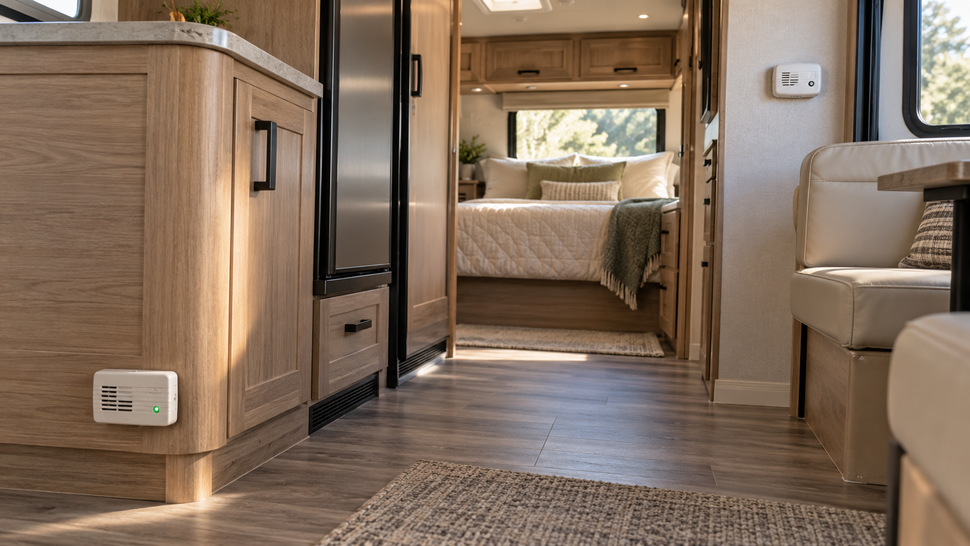
No, a carbon monoxide detector will not detect propane, and a propane detector will not detect carbon monoxide. They watch for two different gases with two different sensors, and a trailer with propane appliances needs protection from both. This guide explains what each detector does, where each one mounts, when a combo unit makes sense, and what to do if one goes off.
Two Different Gases, Two Different Dangers
Propane is the fuel itself. A leak from a loose fitting, a cracked hose, or a failing regulator releases unburned gas into the trailer. The danger is fire or explosion. Propane has an added odour that smells like rotten eggs, but you cannot smell it while you sleep.
Carbon monoxide (CO) is what comes out when fuel burns without enough air. Your furnace, water heater, stove, and a generator all produce it. CO has no colour, no smell, and no taste. According to the Government of Canada, exposure causes flu-like symptoms such as headaches, nausea, and dizziness, followed by confusion, drowsiness, and loss of consciousness.
One is a fuel leak. The other is a combustion problem. That is why one sensor cannot cover both.
What an RV Propane (LP) Detector Does
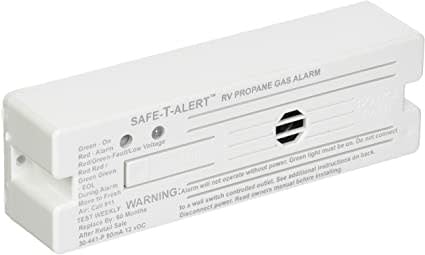
An LP detector senses unburned propane in the air and sounds an alarm before it reaches a dangerous level. Propane is heavier than air, so it sinks and pools near the floor. That is why LP detectors mount low on the wall, close to the floor, usually near the kitchen or the propane appliances. Always follow the mounting height in the manufacturer's instructions.
Most RV propane detectors are hardwired to the trailer's 12 volt system, so there is no battery to replace. The ones we carry include the MTI Industry Safe-T-Alert surface mount and flush mount alarms, the MTI Mini LP Alarm for tight spaces, and the RV Safe surface mount propane leak detectors in black or white.
What an RV Carbon Monoxide Detector Does
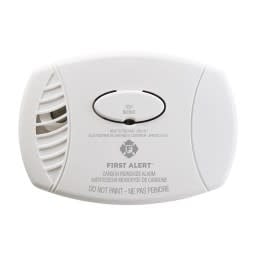
A CO detector measures carbon monoxide building up in the air over time. CO mixes with air instead of sinking, so CO alarms go higher on the wall, ideally near where people sleep. CO is most dangerous at night, when you are asleep and the furnace is running.
In a trailer, CO can come from more than your own appliances. A generator exhaust pointed at your door, a neighbour's generator at a tight campground, or a tow vehicle idling beside an open window can all push CO inside. RV-rated CO alarms come in two styles: battery powered, like the BRK CO250 series 9V alarm, and 12 volt hardwired, like the MTI Industry flush mount CO detector.
Propane Detector vs CO Detector at a Glance
| Propane (LP) Detector | Carbon Monoxide (CO) Detector | |
|---|---|---|
| Detects | Unburned propane leaking from the system | CO from burning fuel (furnace, water heater, stove, generator) |
| Main danger | Fire or explosion | Poisoning |
| Can you smell it? | Yes, rotten egg odour (not while sleeping) | No |
| Gas behaviour | Heavier than air, sinks | Mixes with air |
| Mounting | Low, near the floor | Higher on the wall, near sleeping areas |
| Power | Usually 12V hardwired | 9V battery or 12V hardwired |
Combo LP/CO Detectors: One Unit, Two Sensors
A combination alarm puts both sensors in one housing. The MTI Industry Slimline LP/CO alarm, the MTI Dual CO/Propane detector, and the RV Safe Carbon Monoxide/Propane Leak Detector all work this way, and they are a common factory install in newer trailers.
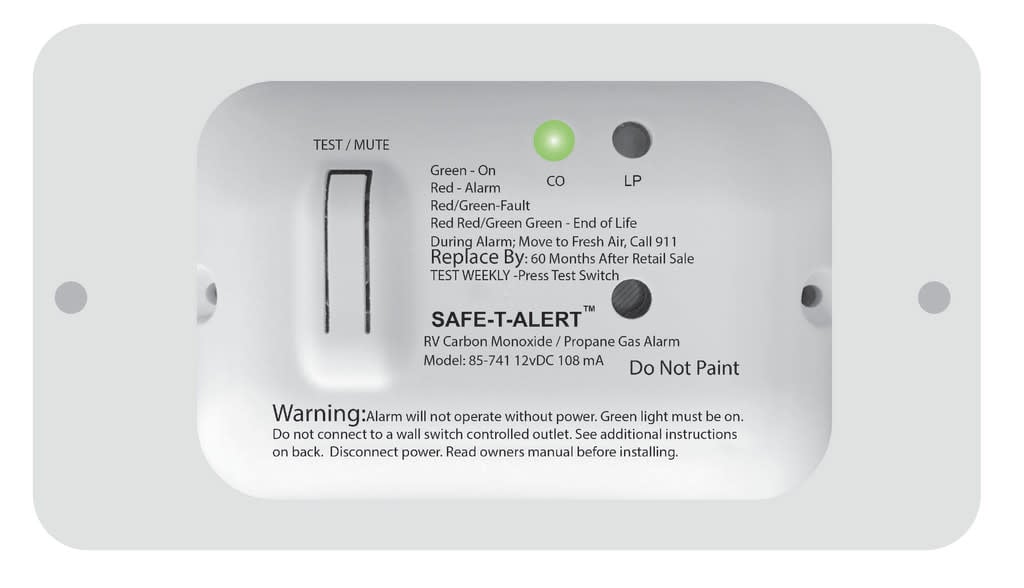
The upside: one unit, one set of wires, one spot on the wall. For most travel trailers, a combo is the simplest way to cover both gases.
The tradeoff: both sensors share one location, which is set low for propane. And when the unit reaches end of life, you replace the whole thing, even if only one sensor has aged out. Some owners with larger trailers or a separate bedroom add a standalone CO alarm near the bed on top of the combo.
If your trailer only has an older propane-only detector, adding a battery-powered CO alarm is the fastest upgrade. No wiring required.
Why Both Matter More in the Shoulder Season
Camping in New Brunswick does not stop in August. Plenty of owners stretch the season into late September and October, and some camp again in May. Those are the nights the furnace runs for hours with every window closed. That is prime time for CO problems, whether from a furnace with a blocked exhaust vent, a generator running overnight, or a trailer sealed up tight against the cold.
Spring brings the propane side of the risk. After a winter in storage, hoses dry out, fittings loosen, and regulators can stick. The first time you open the tank valves in the spring is the right time to test your LP detector and check every connection with soapy water. Our guide to single-stage vs two-stage propane regulators covers the warning signs of a regulator that needs replacing, and our L/P hoses include replacement pigtails and braided hoses if one has cracked.
Why Your RV Detector Keeps Going Off
A detector that chirps or alarms with no gas present usually has one of a few causes:
- Low coach battery. Hardwired 12V detectors often alarm or chirp when battery voltage drops. Charge the battery and see if it stops.
- Aerosols and cleaners. Hairspray, spray cleaners, bug spray, and alcohol-based hand sanitizer can set off an LP sensor mounted low.
- Cooking fumes. Heavy cooking right next to a combo unit can trigger it.
- End of life. Many detectors give a distinct signal when the sensor has expired. Check the manual for the pattern.
Never assume it is a false alarm first. Get out, ventilate, and rule out a real leak before you look for other causes.
When to Replace Your Detector
Detector sensors do not last forever. Every unit has a manufacture or replace-by date printed on its label, and sensor life varies by brand and type. Some CO sensors are rated for about five years. If yours is past its date, replace it, even if the green light is still on. A light only tells you the unit has power, not that the sensor still works.
Press the test button before every trip and once a month while you are camping. If a detector fails the test, replace it before you light anything.
What to Do If an Alarm Goes Off
Propane alarm: Get everyone out. Do not flip switches, start the engine, or use anything that could spark. Close both tank valves at the tongue. Open doors and windows from outside if you can do it safely. Once the gas clears, find the leak with a soap and water solution before you relight anything.
CO alarm: Get everyone outside into fresh air right away. If anyone has symptoms like a headache, dizziness, or nausea, call 911. Shut off the furnace, water heater, and generator, and do not go back in until the source is found and fixed.
The NFPA makes the same point for homes: a fuel gas alarm and a CO alarm do separate jobs, and you need both.
Frequently Asked Questions
Does a carbon monoxide detector detect propane?
No. A CO detector only senses carbon monoxide from burning fuel. It will not warn you about unburned propane leaking into your trailer. You need a propane (LP) detector or a combo LP/CO unit for that.
Do I need a carbon monoxide detector if I use propane?
Yes. Every propane appliance in your RV, from the furnace to the stove, produces some carbon monoxide as it burns. A CO alarm warns you if that gas is building up inside instead of venting outside.
Can a leaking propane tank cause carbon monoxide?
A leak on its own releases propane, not CO. Carbon monoxide only forms when propane burns without enough air, like a furnace with a blocked vent or a stove used for heat in a closed trailer.
How can you detect a propane leak in an RV?
An LP detector mounted low is your main warning. You may also smell the rotten egg odour. To find the exact spot, brush soapy water on hoses and fittings with the tank valves open and watch for bubbles.
Can I use a household CO alarm in my RV?
It is better to use one rated for RVs. RV-approved alarms, like the BRK CO250 series, are built to handle vibration, temperature swings, and humidity that a household unit is not designed for.
Browse our RV propane and CO detectors for propane-only, CO-only, and combo LP/CO alarms from MTI Industry, RV Safe, and BRK, in flush and surface mount styles. The rest of our L/P gas parts collection covers hoses, fittings, regulators, and tank covers. If you are replacing tank covers while you are at it, our propane tank cover sizing guide shows how to measure first. Not sure which detector fits the cutout in your wall? Bring the old one to 745 Route 133 in Boudreau-Ouest and we will match it for you.
Recent articles
View all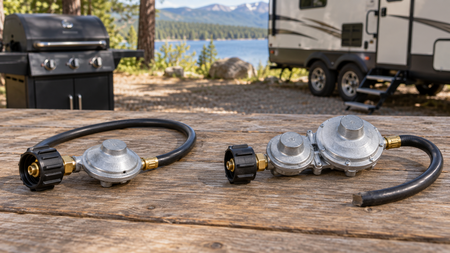
RV & BBQ Propane Regulators: Single-Stage vs Two-Stage
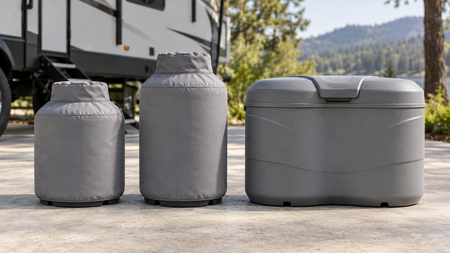
Propane Tank Cover Sizing Guide: 20lb, 30lb & Dual Setups