RV Roof Coating vs Roof Tape: What's the Difference and When to Use Each
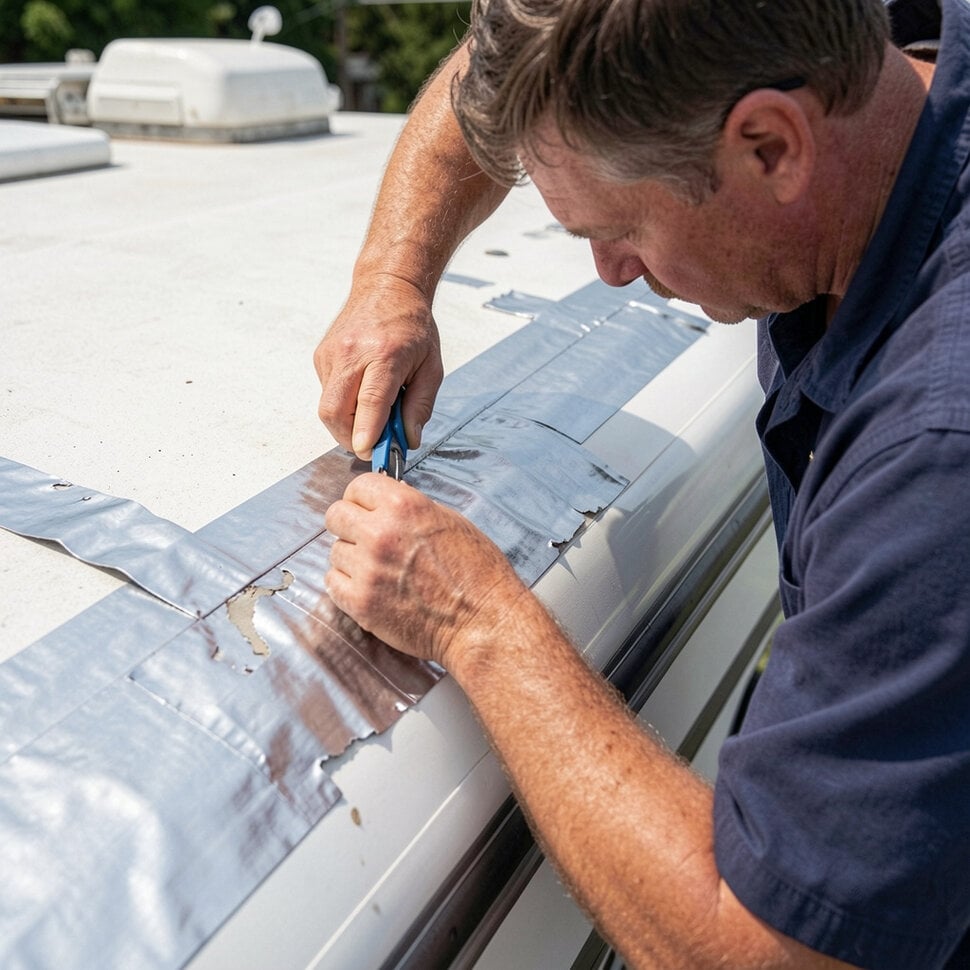
Both products are designed to protect your RV roof from water, but they solve different problems. Using roof tape when your trailer needs a full coating means you are patching individual symptoms while the underlying membrane continues to degrade. Using coating when you need tape means spreading a liquid product over an open tear that requires a physical barrier first. Neither approach works the way it should.
The decision between roof coating and roof tape depends on the type and extent of the damage, as well as the overall condition of the membrane. This guide explains each product's use, where it belongs, and how to choose the right one for your trailer before camping season.
If you have not already read how to inspect your RV roof before camping season and our breakdown of self-levelling vs non-sag lap sealant, those are the right place to start before deciding which repair product you need.
What is RV roof coating?
Roof coating is a liquid-applied product that is rolled or brushed across the entire roof membrane surface. It is not a spot repair. It goes on like paint across the whole roof and cures to form a continuous, flexible membrane layer that restores UV protection, seals surface micro-cracks, and extends the working life of the existing rubber or TPO membrane underneath.
Think of it as a renewal treatment for the roof as a whole rather than a fix for a specific problem area. This product is suitable when the membrane is aging, chalking, or showing widespread fine cracking that spot sealing cannot fully address.
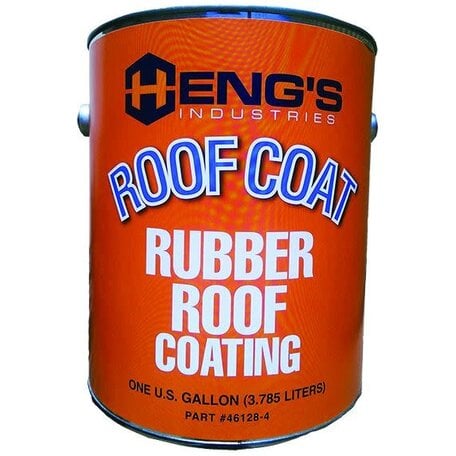
At The Trailer Guys, roof coating options include the Heng's Elixir Rubber Roof Coating in 1-quart and 1-gallon sizes and the Dicor Rubber Roof Acrylic Coating for larger applications. Both are non-toxic, UV-resistant, and formulated to expand and contract with the membrane through temperature changes. Browse the full roof coating selection.
What is RV roof tape?
Roof tape is a self-adhesive membrane strip that bonds directly to the roof surface to cover and seal a specific damaged area. It is a physical patch rather than a liquid treatment. Where coating spreads across the entire roof, tape targets a defined zone and provides a flexible, waterproof barrier over that spot.
It is the right product for discrete problems: a tear in the membrane, a seam that has separated, a crack around a vent flange, or a spot that needs reinforcing before sealant is applied over the top. The tape physically bridges the damaged area and holds it closed.
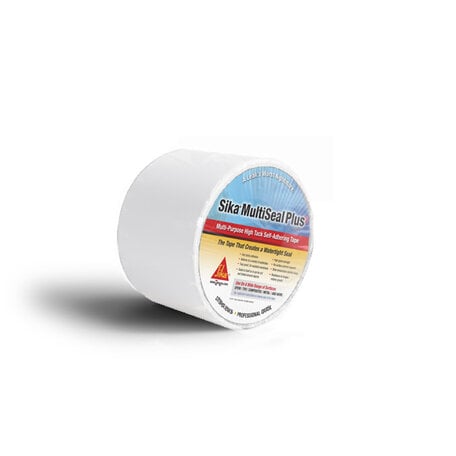
At The Trailer Guys, Sika Multiseal Plus roof tape is stocked in widths from 2 inches up to 12 inches, available by the foot. It is a TPO-membrane tape rated for EPDM, TPO, fibreglass, and most other RV roof materials. UV-resistant and tear-proof, it is well suited to Atlantic Canada's freeze-thaw cycles. Dicor corner tape in 1-1/4 inch and 2 inch widths is also available for sealing corners and right-angle joints. Browse the full roof tape selection here.
Roof coating vs roof tape at a glance
| Roof Coating | Roof Tape | |
| What it is | Liquid membrane applied over the full roof | Self-adhesive patch strip for specific areas |
| Best for | Widespread surface degradation, chalking, UV damage across the membrane | Discrete tears, punctures, seam separations, localized cracks |
| Coverage area | Entire roof surface | Targeted damaged zone only |
| Application method | Rolled or brushed on like paint | Peeled and pressed onto clean surface |
| Works as standalone fix? | Yes, for general membrane restoration | Yes, for localized physical damage |
| Used with lap sealant? | Yes — coat the field and seal penetrations separately | Yes — tape the damage and seal tape edges with lap sealant |
| Roof types | EPDM rubber, TPO (product-dependent) | EPDM, TPO, fibreglass, most RV roof materials |
| Products at The Trailer Guys | Heng's Elixir (qt/gal), Dicor Acrylic Coating | Sika Multiseal Plus (2"-12"), Dicor Corner Tape |
| When not to use it | Over open tears or punctures without tape first | As a substitute for full coating on a degraded membrane |
| Typical coverage | 1 gallon covers a standard travel trailer roof | Sold by the foot — buy only what you need |
| Atlantic Canada consideration | Restores UV and weather protection ahead of summer season | Handles freeze-thaw-related seam stress and membrane cracking |
When roof tape is the right choice
Roof tape is the answer when the problem is specific and localized. If your inspection turns up any of the following, reach for tape before anything else:
A visible tear or puncture in the membrane. A physical break in the roof membrane needs a physical repair. Coating applied over an open tear will bridge the gap temporarily but will not hold through the flexing that happens during travel. Tape creates a bonded patch that stays sealed.
A seam that has separated or lifted. Roof seams run along the edges and sometimes across the field of the roof where sections of membrane overlap. When a seam lifts, it creates an open channel for water to track underneath. Tape pressed firmly over the lifted seam and sealed at the edges with lap sealant is the correct repair.
Cracking or lifting occurs around a specific penetration. If the membrane around a vent, skylight, or AC base has cracked or pulled away from the fixture, tape can reinforce that zone before sealant is applied over it.
A temporary repair during the season. Tape can be applied quickly in the field when a problem appears mid-trip. It is not a permanent substitute for a full repair, but it will hold until you can address the root cause properly.
When roof coating is the right choice
Coating is the answer when the membrane itself is the problem, not a single spot on it.
Widespread surface chalking. EPDM rubber oxidizes over time and develops a chalky white powder on the surface. This condition is normal aging, but it indicates that the membrane's UV protection is depleting. Coating restores that protective layer across the whole surface.
Fine cracking across a broad area of the membrane. Small surface cracks distributed across the roof are a sign that the membrane is drying out and losing elasticity. These micro-cracks are too numerous and too small to patch individually. Coating fills them and provides a fresh flexible layer over the top.
General UV degradation on an aging roof. If the roof is older than eight to ten years and shows visible signs of weathering, a full coating is a cost-effective way to extend its useful life before membrane replacement becomes necessary.
Before long-term storage. Applying a roof coating in the fall before winter storage gives the membrane an added layer of protection against UV and cold during the months when the trailer is not in use.
Can you use both on the same roof?
Yes, and often you should. Coating and tape address different things and work well together as part of a complete roof restoration. The correct sequence is:
- Inspect the full roof and identify all problem areas
- Remove old failed sealant at penetrations
- Apply roof tape over any tears, seam separations, or localized damage
- Seal the edges of the tape and all penetrations with the appropriate lap sealant
- Clean and prep the entire roof surface with Magic Boss rubber roof cleaner, then allow to dry fully
- Apply roof coating over the entire membrane
Coating applied after tape work seals over the tape edges and creates a uniform surface across the whole roof. The tape handles the physical damage underneath; the coating handles the membrane condition overall.

How Atlantic Canada conditions affect your choice
The climate in New Brunswick and across Atlantic Canada creates specific stresses on RV roofs that are worth factoring into your maintenance decisions.
Summer UV exposure in Atlantic Canada is significant from May through August. UV is the primary driver of EPDM surface oxidation and the chalking and micro-cracking that make coating necessary. If you haven't coated the roof in the last three to five years, spring is the perfect time to do so.
Freeze-thaw cycling through late fall, winter, and early spring is hard on seams and any area where two materials meet at a joint. Water that infiltrates a micro-crack in the membrane expands when it freezes, widening the crack further. Tape applied over suspect seams before winter storage is worthwhile insurance against freeze damage.
Heavy rainfall in the fall is when any undetected leak makes itself known. A roof that looked fine in August can show interior water damage by October if seams or penetrations were not properly addressed before the season ended.
Step-by-step: how to apply RV roof tape correctly
- Clean the damaged area thoroughly and let it dry completely. Any moisture or surface contamination will prevent the tape from bonding.
- Cut the tape to length, leaving at least 2 inches of overlap beyond the damaged area on all sides.
- For corners or right-angle joints, use Dicor corner tape to handle the angle before applying flat tape over the top.
- Peel the backing and position the tape carefully before pressing down; once it contacts the surface, it is difficult to reposition.
- Press firmly from one end to the other, working out air bubbles as you go.
- Run a continuous bead of self-levelling lap sealant along all four edges of the tape to seal the perimeter fully.
- Allow 24 to 48 hours before rain exposure.
Step-by-step: how to apply RV roof coating correctly
- Complete all tape and sealant repairs first. Coating goes on last.
- Clean the entire roof surface with Magic Boss rubber roof cleaner and allow it to dry fully. This removes oxidation and prepares the surface for adhesion.
- Apply coating with a medium-nap paint roller, working from one end of the roof to the other in even, overlapping passes.
- Do not apply coating over the sealant beads at penetrations. Work up to them and around them.
- One gallon of Heng's Elixir covers a standard travel trailer roof in one coat. For roofs showing heavy oxidation, a second coat after the first has dried improves coverage and protection.
- Allow the coating to cure fully, typically 24 to 48 hours, before exposing the trailer to rain or storing it with covers on.
Frequently asked questions
Can I apply roof coating without cleaning the roof first?
No. Coating applied over a dirty or oxidized surface will not bond correctly and will peel prematurely. The Magic Boss cleaner for rubber roofs is specifically designed to prep EPDM surfaces before coating and is an important part of the application process, not an optional step.
Is roof tape a permanent repair?
A properly applied tape repair using a quality product like Sika Multiseal Plus will last for multiple seasons when the edges are sealed with lap sealant. It is not considered a permanent fix in the same sense as a full membrane replacement, but it is a durable, long-term repair for localized damage.
How do I know if I need tape, coating, or both?
If the damage is in one specific spot, start with tape. If the membrane surface is broadly degraded, chalking, or showing fine cracks across a wide area, coating is what you need. If your inspection reveals both localized damage and general membrane aging, use both in the correct sequence: tape first, then coating over the whole surface.
Does roof coating work on TPO roofs?
Heng's Elixir and Dicor Acrylic Coating are formulated primarily for EPDM rubber roofs. For TPO surfaces, verify compatibility with the product label before applying. Sika Multiseal Plus tape is specifically rated for TPO and is a reliable repair option for that material regardless of coating compatibility.
Where can I buy RV roof coating and roof tape in Atlantic Canada?
The Trailer Guys carry both product lines at 745 Route 133, Boudreau-Ouest, New Brunswick, with Canada-wide shipping available. Browse the complete RV roof maintenance collection; everything is in stock, or you can contact the team by phone or text to confirm which product is right for your roof before ordering.
Recent articles
View all
Scissor Jacks vs Stabilizer Jacks: Which Does Your Trailer Need?
5th Wheel & A-Frame Trailer Jacks Explained